
Did you know a poorly insulated home can waste up to 30% more energy through its building envelope? Choosing between insulated batts and solid core insulated panels is no longer just a technical detail—it’s a critical decision that can slash your energy bills, boost comfort, and ensure your home is built for the future . In this guide, discover the practical differences, real-world performance, and ultimate winner for building with insulated batts vs solid core insulated panel construction.

Are You Wasting 30% More Energy? Unlocking the Real Differences in Building with Insulated Batts vs Solid Core Insulated Panel Construction
Making the right choice between insulated batts and solid core insulated panel construction can mean the difference between a high-performing, energy-saving home and a structure that leaks heat—and money—year after year. With rising energy costs and modern building codes pushing for better efficiency, understanding the strengths and weaknesses of each insulation method is essential.
Insulated batts are a common sight in traditional construction: cost-effective, easy to install, and familiar to most builders. In contrast, solid core insulated panels —which include structural insulated panels (SIPs) —offer a newer approach. These panels integrate high-density rigid foam between two facings, such as oriented strand board, providing a tightly sealed envelope that can dramatically reduce thermal bridging and air leakage . This section will shed light on how your choice could impact both your bills and your comfort every day.
How Thermal Bridging and Insulation Choices Impact Real Energy Bills
“As much as 30% of a building’s energy loss is through its envelope – a critical reason to understand the differences between the insulated batts and solid core panels.”
Thermal bridging occurs when heat bypasses your insulation via structural elements like studs and floor joists—potentially wasting significant energy. Conventional batt insulation struggles to address these “energy leak highways,” while solid core insulated panels or SIPs panels virtually eliminate them by providing a continuous foam core barrier. This translates directly to lower energy bills : homes built with solid core insulated panels can see as much as 50% less heating or cooling loss compared to batt-insulated homes. Deciding between systems is about more than material cost—it’s about understanding what happens with every degree of lost heat flow.
The effectiveness of an insulation system is measured by its ability to minimize air infiltration and thermal resistance . SIPs build techniques often achieve tighter building envelope control, reducing drafts and hot or cold spots that are all too common with poorly installed batts. For most homeowners and builders, this means more consistent indoor temperatures, better comfort, and notable savings on monthly energy costs.
Understanding Building with Insulated Batts vs Solid Core Insulated Panel Construction
-
Explore the structure, installation, and efficiency of insulated batts
-
Understand how solid core insulated panel construction works (including structural insulated panel and structural insulated panels technologies)
The structure of an insulation system affects both how it performs and how easy it is to install. Insulated batts are commonly made from fiberglass or mineral wool, fitted between wall studs and floor joists in conventional framing. These batts rely on a snug fit to be effective—any gaps reduce performance and increase thermal bridging. Meanwhile, solid core insulated panels (or SIPs panels ) are pre-fabricated wall or roof panels with an insulation core of rigid foam . Their precision-milled edges allow each panel to lock together tightly, minimizing air space and leaks.
For installation, batt insulation requires careful cutting and fitting around electrical and plumbing, and is more forgiving for changes or remodels. Solid core insulated panels are lifted into place—ideal for modular or prefabricated projects—creating a continuous, nearly airtight layer with much less hassle during the build. Efficiency-wise, panels consistently deliver higher R-values (thermal resistance), especially where framing would otherwise compromise insulation.
|
Comparing Insulated Batts and Solid Core Insulated Panel Construction: Material, R-Value, Cost, Installation Methods |
||||
|
Insulation Type |
Material Example |
Typical R-Value per Inch |
Cost per sqm |
Installation Method |
|---|---|---|---|---|
|
Insulated Batts |
Fiberglass/Mineral Wool |
3.0 – 3.8 |
Low |
Fits between framing, cut to size |
|
Solid Core Insulated Panels (SIPs) |
Rigid Foam (EPS/XPS), OSB facings |
4.0 – 7.0 |
Moderate to High |
Pre-fabricated panels, tongue-in-groove assembly |
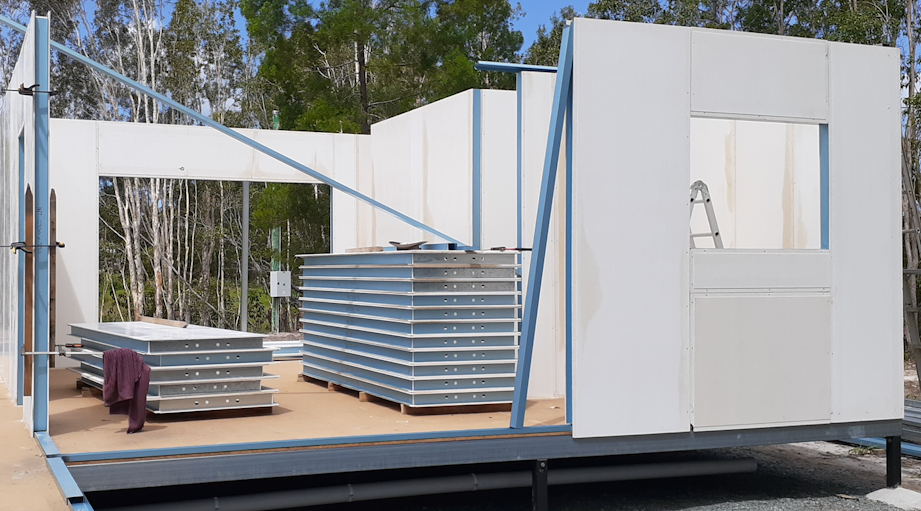
 Builders standing the Sips walls with solid core insulation on a 2 bedroom home in Victoria.
Why Choose Structural Insulated Panels (SIPs) or Solid Core Insulated Panels?
For those chasing premium performance in energy savings, comfort, and construction speed, structural insulated panels (SIPs) and solid core insulated panels stand out. These systems are more than just insulation—they’re a leap forward in integrated building envelope technology. Their continuous foam core eliminates most thermal bridging posed by standard framing, while airtight joints cut air leakage to a minimum.
Solid core panels are especially powerful in homes with extreme climate demands or where energy efficiency is a key priority. While the initial investment may be higher than batts, the payback period is shortened by lower ongoing energy costs , and the robust assembly enhances long-term durability and indoor comfort. Let’s dive into why these panels often earn top marks from energy-conscious builders and architects.
Advantages of Solid Core Insulated Panel Construction: Superior Rigid Foam and Thermal Performance
-
Minimal thermal bridging
-
Robust building envelope integrity for energy efficiency
-
Time and labor-saving with sips build methods
The core advantage of SIPs build and solid core panels is minimal thermal bridging . Where batt insulation leaves weaknesses at every stud and intersection, solid panels deliver a nearly homogenous insulation core that covers virtually all surfaces. This design not only limits heat flow but also dramatically improves indoor climate control throughout the year.
Building envelope integrity is also significantly higher with panels. Their rigid foam insulation—sandwiched between oriented strand or fibre cement boards—reduces air infiltration and drafts, a big win for achieving net-zero or energy efficient certification. The labor-saving aspect shouldn’t be overlooked, either: panels arrive pre-cut and engineered, slashing on-site building time and reducing errors that might undermine insulation performance.
When to Use Structural Insulated Panel Over Traditional Batts in Construction
-
Residential, commercial, and modular projects
-
Climate and site considerations
Solid core insulated panels shine in projects where speed, precision, and energy performance matter. This includes residential builds aiming for lower running costs, commercial properties chasing green certifications, and any modular construction where quick assembly is valued. In regions with harsh winters or blazing summers, the panels’ superior thermal performance helps maintain steady interior temps with less reliance on heating or cooling.
However, using panels requires upfront planning: window and door openings are pre-designed and modifications are tricky once panels are installed. For renovations or buildings with unusual layouts, traditional batt insulation may offer greater flexibility. Evaluating your site’s climate, design needs, and future expansion plans is key to choosing the optimal system.
Insulated Batts Explained: Performance and Practicality
Insulated batts remain a staple in the building industry thanks to their low cost, accessibility, and adaptability for all sorts of framing styles. Available in rolls or precut sections, they fit neatly into the spaces between timber frame studs and floor joists , and can be used for both new builds and retrofits of older homes. Their popularity stems from being DIY-friendly and widely available, tackling modest energy efficiency goals with reasonable ease.
However, the performance of batt insulation can be highly dependent on careful installation . Gaps, compression, or misalignment around wiring and pipes can leave cold spots and create thermal bridging and air gaps where condensation can form . While batts help meet basic building codes , they can fall short in extreme climates or where airtightness is critical. Next, let’s examine how these factors play out in real-world projects.
How Insulated Batts Work: Rigid Foam, Installation, and Cost Considerations
-
Thermal bridging challenges
-
Practical energy savings with insulated batts
-
Advantages for DIY projects and traditional builds
While insulated batts may not offer a continuous foam core like panels, they still contribute meaningful energy savings—if installed snugly. Thermal bridging is the main battle: wherever the batt hits a stud, heat can pass through. Despite this weakness, for standard homes or smaller renovations, batts deliver better energy efficiency than uninsulated or poorly insulated walls. They also make great sense where budget or experience limits more advanced technologies.
DIY installers appreciate batts’ flexible sizing and lower cost per square meter . For straightforward wall or roof cavities and simple building layouts, their practicality shines. While up-front savings are clear, be aware that long-term costs could climb if energy loss through thermal bridging outpaces the savings achieved by choosing the cheapest material.
 A Builder pressing the Insulated Wall Batts in place in a traditional stud framed wall, being careful to avoid leaving any air gaps
Thermal Performance: Quantifying the Differences in Building Envelope
Determining the real difference between batt insulation and solid core insulated panel construction starts with analyzing how each performs in the field. Thermal performance isn’t just about lab R-values—it’s about sustained comfort, low energy bills, and minimizing temperature swings. The building envelope —the physical barrier between inside and out—plays a starring role.
Research and case studies repeatedly show that buildings with continuous foam core insulation (like in SIPs) beat batt-insulated homes for air tightness, steady heat retention, and climate resilience. Laboratory analysis and real-world comparisons make clear: bridging, gaps, and assembly quality all amplify the performance gap.
Analysis: Thermal Performance and Building Envelope in Various Conditions
-
Thermal bridging in batts vs solid core insulated panels
-
Real-world case studies and research
In structures using batts , infrared thermography often highlights lines of high heat loss along framing networks. With solid core insulated panels , those hot or cold “rivers” are nearly erased. Studies from the United States and other regions show that homes using SIPs can record 20-30% energy cost savings annually compared to traditional batt assemblies.
The difference is especially pronounced in extreme climates, where every watt of energy counts for comfort and stability. The tighter fit, robust connections, and overlapping panel joints in SIPs provide a high-integrity building system that’s difficult to match with batts, especially when accounting for air infiltration and thermal bridging over decades of use.

Case Study: SIPs Build and Foam Core Applications in Modern Construction
To see these differences in action, consider a modern modular build using structural insulated panels in place of traditional wall framing fitted with batts. These projects consistently show faster construction times, fewer callbacks, and improved on-site safety. Pre-manufactured panels reduce unpredictable weather delays and ensure consistent assembly quality—key benefits in both residential and commercial market segments.
In residential developments across Australia and North America, SIPs have been used for everything from compact eco-cabins to multi-level family homes. Each case underlines panel systems’ ability to deliver on speed, thermal performance, and durability.
Modular and Prefabricated Advantages with Structural Insulated Panels
The integration of factory-built SIPs panels in modular construction makes large-scale builds faster, safer, and more consistent. With structural components and insulation in a single assembly, site labor is drastically reduced and errors minimized. Commercial installations similarly use these panels for offices, schools, or healthcare facilities where thermal consistency and rapid assembly are priorities.
Residential SIPs builds highlight lasting structural strength, improved occupant comfort, and low maintenance costs—all driven by a robust, airtight building envelope and the high R-value of each SIPs panel .
Speed of Construction and Cost Savings
-
Examples of commercial and residential sips builds
One standout benefit of the SIPs approach is the accelerated construction timetable. By assembling pre-engineered SIPs panels on-site, builders often cut build times by 30%-50% or more —a direct project cost saving. For multi-unit developments or urgent commercial space deliveries, this can mean finishing projects months sooner than conventional methods would allow.
Frequently Overlooked Disadvantages of Insulated Panels and Structural Insulated Panels
While insulated panels offer remarkable benefits, they’re not without tradeoffs. It’s essential to understand the potential drawbacks of adopting SIPs or solid core panels, especially when it comes to building design, future adaptability, and long-term maintenance.
Even systems designed for airtightness and resilience have risks if not installed precisely or maintained regularly. Building codes and design choices must anticipate and address issues unique to each insulation type to safeguard building integrity and occupant comfort.
Design Limitations and Moisture Management Concerns
Design flexibility is naturally limited with SIPs since panels are pre-cut for specific openings and shapes. Unforeseen plan changes or renovations require extra effort and expertise. Additionally, because panels are so airtight, they require robust moisture management (such as proper vapor barriers and ventilation) to prevent trapped humidity and condensation, which can damage both insulation and framing.
A failure to integrate effective moisture control with spray on wall sealants can lead to problems over time, especially in climates with high rainfall or humidity. For designers, anticipating drainage, vapor flow, and mechanical ventilation is vital to capitalizing on the full performance of insulated panels.
Comparing Repair and Replacement Over Time
“Even high-performance insulated panels must be installed correctly to prevent hidden risks like moisture trapping and thermal bridging.”
While solid core insulated panels are highly durable, their repair or replacement can be more complex than for batts. Damaged sections often require professional intervention—sections of panels may need full replacement, whereas batts can be swapped with basic tools. Over decades, these factors can influence long-term costs, especially if modifications to plumbing, wiring, or layout are needed.
Despite these disadvantages, when panels are properly installed, routine issues are rare. The investment in careful upfront planning and professional installation pays off in minimized risks and sustained performance over the building lifespan.
Step-by-Step: Building with Insulated Batts vs Solid Core Insulated Panel Construction
Insulated Batts Installation: Detailed Instructions, Best Practices, and Common Pitfalls
Installing batt insulation involves more than stuffing material into wall cavities. Best practice includes measuring and cutting batts to match each space, splitting around wiring or plumbing, and using a vapor barrier to reduce moisture risks. Stapling or fitting the batts ensures they stay in place, but installers must take care not to compress the material, as this reduces its effectiveness.
Common pitfalls include leaving gaps, compressing batts, or failing to seal penetrations, all of which undermine the intended thermal resistance. Attention to detail during installation directly correlates to improved comfort and lower bills.

Solid Core Insulated Panel and SIPs Build Process Explained with Rigid Foam Details
The installation of solid core insulated panels is characterized by its speed and precision. Panels, pre-manufactured to specific sizes—with embedded openings for doors and windows—are lifted and locked together using tongue-and-groove joints or splines. Designed for purpose moisture sealants for internal & external walls, tape and the correct setting compounds are applied to ensure airtightness.
Critical steps include aligning panel edges, securing connections with screws or fasteners, and integrating moisture barriers by spraying entire wall system inside & out once the walls are standing. once the panels are up, supplementary finishes like a spray on render system similar to what is used for a durable garage floor surface. Integration for (plumbing, & electrical wiring) is usually planned for in the design phase. Proper training or a sip manufacturer ‘s oversight is recommended to guarantee system warranty and ultimate energy performance.
Material Durability, Cost Comparison, and Environmental Impact
When considering insulated batts versus solid core insulated panels , it’s vital to weigh not just purchase price, but also long-term durability and impacts on the environment. SIPs and similar panels often generate less construction waste, and allow smaller heating/cooling systems—translating to lasting environmental and financial savings.
However, panel technology requires more resources upfront and is harder to recycle at end-of-life compared to recycled-fiber batts. Evaluate not just initial investment, but lifecycle, maintenance, ability to reuse in renovations, and environmental certifications for a well-rounded decision.
|
Lifecycle Cost, Durability, and Sustainability Score: Insulated Batts versus Solid Core Insulated Panels |
|||
|
Insulation Type |
Lifecycle Cost |
Average Lifespan |
Sustainability/Environmental Score |
|---|---|---|---|
|
Insulated Batts |
Low to Moderate |
25 – 35 yrs |
Recyclable, lower embodied energy |
|
Solid Core Insulated Panels (SIPs) |
Moderate to High (offset by energy savings) |
50+ yrs |
High performance, lower waste, difficult to recycle |
Making the Right Choice: Which Works Best for Your Building Envelope?
-
Energy ratings, installation skill, building type, and budget analysis
No single solution fits every build. Choose batt insulation if you need affordability, flexibility for complex layouts, or ease of future renovation. Opt for solid core insulated panel construction to maximize energy ratings, streamline installation, and meet the highest standards for airtight, efficient buildings. Your site conditions, budget, desired building envelope performance, and available expertise all factor into the winning insulation solution.
In either scenario, a focus on proper installation delivers the biggest returns. Poorly fitted batts or SIPs left unsealed will never yield their promised benefits. Plan carefully, consult experienced professionals, and insist on the right materials for every layer and detail of the project.
Top Expert Tips for Building with Insulated Batts vs Solid Core Insulated Panel Construction
-
Checklist for assessing project requirements
-
Avoiding most common insulation pitfalls
1. Evaluate site and climate: Cold, hot, or humid environments demand specific insulation strategies—don’t just copy past projects.
2. Match insulation to your build type: For modular or energy-critical homes, SIPs win; for one-off renovations, batts may suffice.
3. Prioritize airtightness: Always use vapor barriers, seal joints, and pay attention to penetrations for HVAC or plumbing.
4. Plan for the future: If you expect frequent changes, choose a flexible system like batts—otherwise, long-term cost and durability favor panels.
“The most effective building envelope marries proper installation, high-performing products, and design flexibility.”
Engage with certified installers, work closely with designers, and never underestimate the value of detailed planning at the insulation stage.
People Also Ask
What are the disadvantages of insulated roofing panels?
While solid core insulated panels and structural insulated panels boost efficiency, disadvantages include upfront costs, potential moisture accumulation, fire code requirements, and fit challenges in renovations. Correct installation and design are crucial to overcoming these issues.
What building material has the best insulation?
Aerogel offers the highest R-value, but for practical and structural applications, solid core insulated panels (like structural insulated panels) and rigid foam outperform batt insulation in thermal performance and airtightness.
What is one disadvantage of using structural insulated panels?
A primary disadvantage of structural insulated panels is the difficulty in modifying panelized structures post-installation. Structural insulated panel custom work and later adjustments often require professional intervention.
What type of insulation is most effective in conserving energy in a building?
Solid core insulated panels with foam core insulation deliver exceptionally low thermal bridging, thus conserving more energy than traditional insulated batts, particularly in continuous and airtight envelope assemblies.
|
PAA Snapshot Table: Quick answers for building envelope and insulation effectiveness |
|
|
Question |
Quick Takeaway |
|---|---|
|
What are the disadvantages of insulated roofing panels? |
High upfront cost; moisture management vital; requires code compliance |
|
What building material has the best insulation? |
For homes, SIPs and rigid foam outperform batts in R-value and performance |
|
One disadvantage of using structural insulated panels? |
Difficult to alter or retrofit once installed; may need expert help |
|
Insulation most effective for energy saving? |
Solid core panels excel—uniform, airtight, minimal thermal bridging |
Frequently Asked Questions: Building with Insulated Batts vs Solid Core Insulated Panel Construction
-
How do structural insulated panel and rigid foam technologies impact long-term savings?
-
Is DIY feasible for solid core insulated panels, or are professionals required?
-
Are there significant eco-benefits with either method?
Q: How do structural insulated panel and rigid foam technologies impact long-term savings?
A: These technologies dramatically cut energy demand by reducing leaks and thermal bridging, leading to lower heating and cooling bills for decades. The higher initial investment in SIPs is typically recovered through superior long-term savings and reduced maintenance.
Q: Is DIY feasible for solid core insulated panels, or are professionals required?
A: While assembling panels may appear straightforward, professional installation is highly recommended—for optimal airtightness, correct sealing, and to maintain manufacturer warranties.
Q: Are there significant eco-benefits with either method?
A: Both options can be environmentally friendly—SIPs reduce energy loads and waste, while batts often use recycled content. SIPs ultimately provide higher energy efficiency and longer durability, which can offset their upfront material impact.
“Every building project has a unique set of requirements—insulation selection should be guided by holistic building envelope goals.”
Summary and Key Takeaways on Building with Insulated Batts vs Solid Core Insulated Panel Construction
-
Insulated panels (SIPs) offer industry-leading energy performance when properly installed
-
Traditional batts remain popular for affordability, flexibility, and renovations
-
Prioritize building envelope integrity and compare lifecycle costs
-
Consult professionals for optimal performance with rigid foam or SIPs build approaches
Ready to Build Smart? Get Expert Advice on Building with Insulated Batts vs Solid Core Insulated Panel Construction
-
Phone Col on 0418 712 539
-
Email us at https://sipsmodularhomes.com.au/