
Did you know? In just the last three years, the number of Australian homeowners securing sips home construction financing has nearly doubled, with many reporting significant energy savings over 20% compared to traditional builds. With rising construction costs and an amplified focus on eco-friendly living, exploring sips home build mortgage solutions has become more important—and potentially rewarding—than ever. In this in-depth guide, we break down why this financing is surging in popularity, how it works for owner-builders and registered builders, and whether it’s the right choice for your dream home.
A Surprising Fact: The Rising Trend in SIPS Home Construction Financing
As the Australian housing landscape pivots towards sustainability and efficiency, sips home construction financing and build mortgages have seen an unprecedented rise. More homeowners and investors are waking up to the unique benefits sips homes offer—especially regarding cost savings, build mortgages tailored for energy-efficient builds, and faster project timelines. Financing options for sip home projects provide flexible build mortgage solutions for both owner builders and registered builders, accommodating diverse needs and budgets.
With traditional construction loan rates fluctuating and utility costs climbing, SIPS construction represents a smart modern alternative. A growing base of financial institutions are now developing construction loan and build mortgage packages specifically for SIP home and modular builds, reflecting the need for competitive payment terms, stage payment mortgage releases, and reduced long-term expenses. These advantages make SIPS home construction financing especially attractive for sustainable home building in today’s market climate.
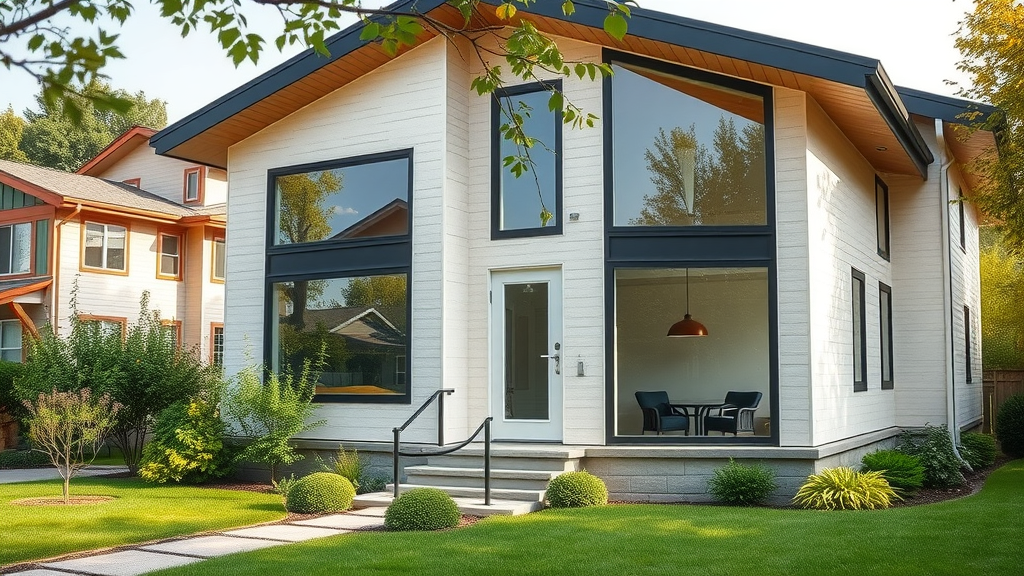
Photorealistic rendering of a modern SIP home exterior, showcasing sustainable architecture and natural landscaping.
SIPS Home Construction Financing: Why Interest is Surging
Several factors contribute to the current surge in popularity for sips home construction financing and specialized build mortgages. Foremost among these are the long-term savings on energy bills. SIPs provide superior insulation and airtightness, dramatically reducing heating and cooling costs—a benefit that directly aligns with the goals of prospective homebuyers seeking long-term value. Build mortgage products for sip homes now commonly factor in projected energy savings and reduced build times, streamlining approval processes for applicants.
Moreover, shifting government policies supporting green incentives and sustainability have led lenders to develop flexible construction loan and build mortgage products for sip homes and other energy-efficient construction methods. Homeowners report that these financing options often come with competitive deposit requirements, and some lenders even offer lower rates based on anticipated reductions in energy usage. The combination of regulatory support, market demand, and genuine cost savings has pushed sips home construction financing into the national spotlight.
“According to recent industry data, owners choosing sips home construction financing have seen an average of 20% energy cost savings over traditional builds.”
What You’ll Learn About SIPS Home Construction Financing
-
Build mortgage options for SIPS home construction
-
Detailed comparison of construction loan choices
-
Understanding cost savings and energy efficiency benefits
-
Potential drawbacks and how to mitigate them
-
Navigating build mortgages as an owner builder or with a registered builder
Understanding SIPS Home Construction Financing
What Is SIPS Home Construction Financing?
At its core, SIPS home construction financing refers to the array of financial products—such as construction loans and build mortgages—designed for building with SIPs (Structural Insulated Panels). Unlike traditional stick-built homes that rely on timber frames and layer-by-layer construction, SIP homes use insulated panel systems that accelerate build timelines, enhance energy efficiency, and provide superior thermal performance.
Financing solutions for SIP homes can differ from conventional home building loans. Since the construction method is innovative, lenders may require additional documentation about the building process, energy efficiency forecasts, and builder experience. Many banks and specialist lenders now recognize the value SIPS provide—both in lowering long-term energy bills and supporting Australia’s green building initiatives—making it easier for forward-thinking homeowners to secure funding for dream living spaces built with sustainability at the heart.
How Does a Build Mortgage Work with a SIP Home?
A build mortgage for SIP homes operates similarly to a traditional construction loan but is specifically tailored to accommodate the unique pace and needs of modular and SIP construction. It typically releases funds in stages—aligned with construction milestones—rather than as a single lump-sum. The structured payment schedule (often called a stage payment mortgage) ensures both homeowner the Sips Home kit provider and the builder have financial security throughout the process. See the new Prefab Home Loans recently released by the Commonwealth Bank.
https://commbank.com.au/home-loans/prefab-homes.html
Payments are released as key phases are completed: foundation, slab or footings and raised flooring systems, panel installation, lock-up, fit-out, and handover. Since sips offer a faster construction method and significant cost savings on labor and materials, build mortgages often result in shorter loan terms and reduced interest payouts for borrowers. For owner-builders the savings are greater, but lenders may require more rigorous assessment of experience and project planning, while registered builders generally streamline approval. Regardless of the approach, understanding your payment terms and proactively managing loan drawdowns is crucial.

A confident couple reviewing their SIP home construction financing paperwork and plans at home.
Comparing Build Mortgages and Construction Loans for SIPS Home Projects
When assessing build mortgage versus traditional construction loan options for SIP home projects, several distinguishing factors emerge. First, build mortgages are often more adaptable for modular or panel-based construction, with flexible payment schedules that align with the swifter project delivery SIPs provide. On the other hand, conventional construction loans tend to follow stricter stage guidelines suited to traditional stick builds and may not fully recognize the accelerated pace or unique supplier relationships of SIPS projects.
Build mortgages dedicated to SIP homes often offer better approval processes due to industry recognition of energy savings, value, and streamlined construction. Many lenders also require lower deposit amounts and allow for owner builders to access products typically reserved for registered builders with a track record of SIP projects. It’s always vital to compare terms, fees, and flexibility when reviewing your sips home construction financing options.
The Financial Advantages of SIPS Home Construction Financing
Cost Savings and Long-Term Value in Build Mortgage Planning
One of the biggest advantages of securing sips home construction financing and build mortgages is the tangible cost savings—both during construction and long into the future. SIP homes’ rapid assembly means lower labor costs, reduced construction durations in some situations saving many extra months of expensive rental costs, and fewer surprise expenses associated with weather delays or site issues common in traditional stick builds. Sips provide outstanding thermal insulation, which dramatically lowers heating and cooling costs—delivering lasting value throughout the life of the home.
Long-term, these energy savings can significantly ease the burden of loan repayments, freeing up funds for lifestyle upgrades or accelerated loan payoff. Additionally, because SIP homes commonly qualify for green building incentives, homeowners may be eligible for grants, rebates, or more favorable payment terms on their build mortgage or construction loan. These advantages have made build mortgages a competitive choice for those seeking to future-proof their financial and energy investments.
|
Comparison Table: SIPS Home Construction Financing vs. Traditional Construction Loans |
||
|
Feature |
SIPS Home Construction Financing |
Traditional Construction Loans |
|---|---|---|
|
Loan Terms |
Shorter (due to faster build times) |
Longer (stick-built process) |
|
Deposit Requirements |
Flexible, often 10–20% |
Generally 20% standard |
|
Cost Savings |
High (energy, labor, time) |
Standard; few ongoing savings |
|
Approval Process |
Specialist lenders, greener incentives |
Traditional banks, stricter conditions |
|
Drawdown Process |
Aligned with SIP panel stages |
Fixed to standard build milestones |
Energy Savings with SIPS Home Construction Financing
Why SIPS Homes Are Leaders in Energy Efficiency
Sips homes are renowned for their exceptional energy efficiency and associated energy savings. The core structure—composed of rigid foam sandwiched between structural Fibre Cement boards—acts as a thermal barrier, delivering high R-values and airtightness. This structure helps prevent temperature loss in winter and heat gain in summer, resulting in substantial energy savings for heating and cooling throughout the year. SIPS construction outperforms traditional stick-built homes, frequently cutting annual heating and cooling costs by 20–30%.
With energy prices continuing to rise, the long-term value of living in a SIP home becomes even more pronounced. Homeowners will appreciate stable, predictable utility bills and the satisfaction of a reduced environmental footprint. For those considering sips home construction financing, these measurable energy efficiency outcomes can help secure favourable loan terms and possibly enable access to special interest rates, green rebates, or even additional property value on resale.

A family inside a SIPS home adjusts a smart thermostat, enjoying energy-efficient appliances and open-plan living.
Financial Impacts of Energy Savings on Loan Repayment
The energy savings sips home construction financing leads to cannot be overstated. Lower utility bills equate to more discretionary income, which can be redirected towards loan repayments or other financial priorities. Over the average 25-30 year mortgage, even a 20% reduction in monthly energy bills can result in tens of thousands of dollars saved—directly impacting your ability to pay off your build mortgage faster or invest further in your living space.
For those leveraging green finance products, some lenders even factor expected energy savings into loan assessments, potentially improving your borrowing capacity. The realistic, consistent nature of these savings makes SIP home construction not just an eco-friendly choice, but a smart long-term financial strategy. Energy efficiency improves home resale value, enhances borrowing conditions, and supports a better quality of life—all vital considerations when comparing sips home construction financing to conventional loans.
Step-by-Step Guide: Building with SIPS and Securing Construction Loan Approval
-
Assessing your budget and eligibility: Evaluate your savings, income, debt, and borrowing power. Seek pre-approval for build mortgage or construction loan options.
-
Selecting a SIP home design: Decide on modular or custom SIPS home layouts, balancing costs and preferences.
-
Applying for build mortgages: Gather documents (blueprints, builder agreements, energy reports) for lender submission.
-
Navigating conditional approvals: Respond quickly to lender requests and finalize construction schedules.
-
Overseeing construction and progressive loan drawdowns: Monitor each stage (foundation to handover) and manage payments as builder achieves key milestones.

An experienced consultant advises clients on SIP panel blueprints and construction loan details.
Common Pitfalls in SIPS Home Construction Financing – and How to Avoid Them
Understanding the Negatives of SIPs Home Construction Financing
Like any construction method, there are potential drawbacks to sips home construction financing. Not all lenders are familiar with SIP or modular builds, leading to stricter documentation requests or delays in approval. Some regions may have limited supplier networks, increasing delivery times and upfront costs. For owner-builders new to SIP construction, the steeper learning curve can result in project hiccups or unexpected expenses.
However, most of the negatives associated with SIPS homes can be addressed with appropriate research and proper guidance. Partner with experienced builders and consultants familiar with SIP projects, and seek out specialist lenders who understand modular build nuances. Taking these precautions can help mitigate most issues and ensure your experience with sips home construction financing is as smooth as possible.
“Not all lenders are familiar with SIPs home construction financing; it pays to work with specialists prepared for modular build nuances.”
People Also Ask About SIPS Home Construction Financing
What are the negatives of SIPs?
While SIPS homes offer numerous advantages, some potential drawbacks include limited local supplier availability, increased upfront costs, and a steeper learning curve for unfamiliar builders although Sips are a lot quicker to build and returns a far better ROI for builders than traditional methods of construction.
Do you have to put 20% down on a construction loan?
Most lenders require a 20% down payment for construction loans, especially for SIPs projects. However, some build mortgages allow for alternative deposit structures, particularly for strong borrowers.
Is it cheaper to build with SIPs?
Building with SIPs can offer significant cost savings over the long term due to faster construction times and reduced energy expenses, even if upfront material costs are slightly higher.
How much does a SIPS HOME construction cost?
SIP home panels typically cost between $70 and $100 per square meter, with overall project costs varying based on design complexity, site requirements, and labor expenses.

Focused builder fits insulated panels at a SIP home construction site, illustrating modular assembly.
Real Stories: Owners Benefiting from SIPS Home Construction Financing
“Our build mortgage for a SIPS home enabled us to move in two months ahead of schedule, with significant monthly savings on energy bills.” — Recent homeowner testimonial
Homeowners across Australia are increasingly choosing SIP homes—drawn by financial and environmental advantages. Families report smoother build experiences and faster move-in dates, while enjoying long-term benefits from energy-efficient living spaces. Many note that their monthly mortgage payments are offset by significant reductions in heating and cooling costs, supporting both financial peace of mind and sustainable lifestyles.
These success stories highlight the importance of working with dedicated SIPS home construction financing specialists. From customized payment schedules to leveraging green building incentives, these experts have helped countless Australians realize their dream home—sooner, and with improved cost certainty.
Expert Insights: What Lenders Look for in SIPS Home Construction Financing
Specialist lenders are keenly interested in several factors when they assess applications for SIPS home construction financing. These include the experience of your chosen builder, the clarity and detail in your project plans, energy performance projections from insulated panels, and your financial profile. Lenders may require a comprehensive set of documents—project timelines, stage payment schedules, insulation and energy modeling data, and, if you’re an owner-builder, a detailed build competency plan.
Demonstrating a strong understanding of these requirements—and showing how your SIP home delivers long-term value—is key to improving approval odds for your build mortgage or construction loan. Early engagement with lenders familiar with SIPs or modular builds can streamline paperwork, reduce delays, and unlock better payment and interest terms.
Frequently Asked Questions (FAQs) on SIPS Home Construction Financing
-
Are SIPS homes eligible for standard build mortgages? Yes, most lenders now recognize SIP homes for standard build mortgages, especially with certified builders and clear project documentation.
-
What documentation is needed for a SIPS construction loan? Prepare building contracts, panel specifications, detailed plans, energy modeling reports, and builder credentials.
-
How does refinancing work with SIP home properties? Similar to traditional home loans, but energy efficiency improvements can sometimes boost property value and make refinancing terms more favorable.
-
Are there green incentives for SIPS home buyers? Always ask your broker as many states and territories offer grants, rebates, or low-interest loans for energy-efficient builds—including SIP homes.
Key Takeaways: Is SIPS Home Construction Financing Right For You?
-
Significant cost and energy savings potential
-
Unique loan requirements for SIPS and modular builds
-
Choice of builder (owner-builder or registered) impacts financing options
Conclusion: Weighing the Smart Choice in SIPS Home Construction Financing
Final Word: Is SIP Home Construction Financing Your Next Step?
SIPS home construction financing presents a compelling opportunity for Australian home builders—pairing sustainability, long-term savings, and flexible financing options. If you’re seeking a future-proofed, energy-efficient dream home, consulting a SIPS specialist is your logical first step.

A SIP home financing specialist ready to guide you through the process with clarity and expertise.
Take Action: Consult a SIPS Home Construction Financing Specialist
Ready to explore your options for sips home construction financing?
Call Col on 0418 712 539 or email us at col@sipsmodularhomes.com.au to discuss your project and secure expert assistance.
Discover: Step-by-step expert tips for securing the best possible finance for your SIP home. Learn about application strategies, avoiding common pitfalls, and how to maximize your energy savings from day one.
Conclusion
Weigh your options carefully, ask the right questions, and consult with a SIPS home financing specialist—you’ll be on the fast track to an energy-smart, future-ready home.
Sources
Securing financing for Structural Insulated Panel (SIP) home construction can be challenging due to lenders’ unfamiliarity with this building method. Traditional banks often perceive SIP constructions as higher risk, potentially leading to reduced loan amounts or stricter terms. This caution stems mostly from a lack of understanding of the strength, speed and safety benifits of the modern Sips technology in comparison to decades of traditional construction they have dealt with.(sustainablehomeloans.com.au)
To navigate these challenges, it’s advisable to consult with mortgage specialists experienced in SIP projects. For instance, BuildStore Mortgage Services offers tailored self-build mortgages that release funds in stages aligned with SIP construction milestones, ensuring cash flow matches payment schedules. (sipsindustries.com)
Additionally, energy-efficient mortgages (EEMs) can be advantageous for SIP homes. These mortgages recognize the reduced operational costs of energy-efficient homes, allowing borrowers to qualify for larger loan amounts by factoring in projected energy savings. A Home Energy Rating System (HERS) report is typically required to assess the home’s energy efficiency and potential savings. (sipsupply.com)
In summary, while obtaining financing for SIP home construction may require additional steps, partnering with knowledgeable lenders and leveraging specialized mortgage products can facilitate the process.